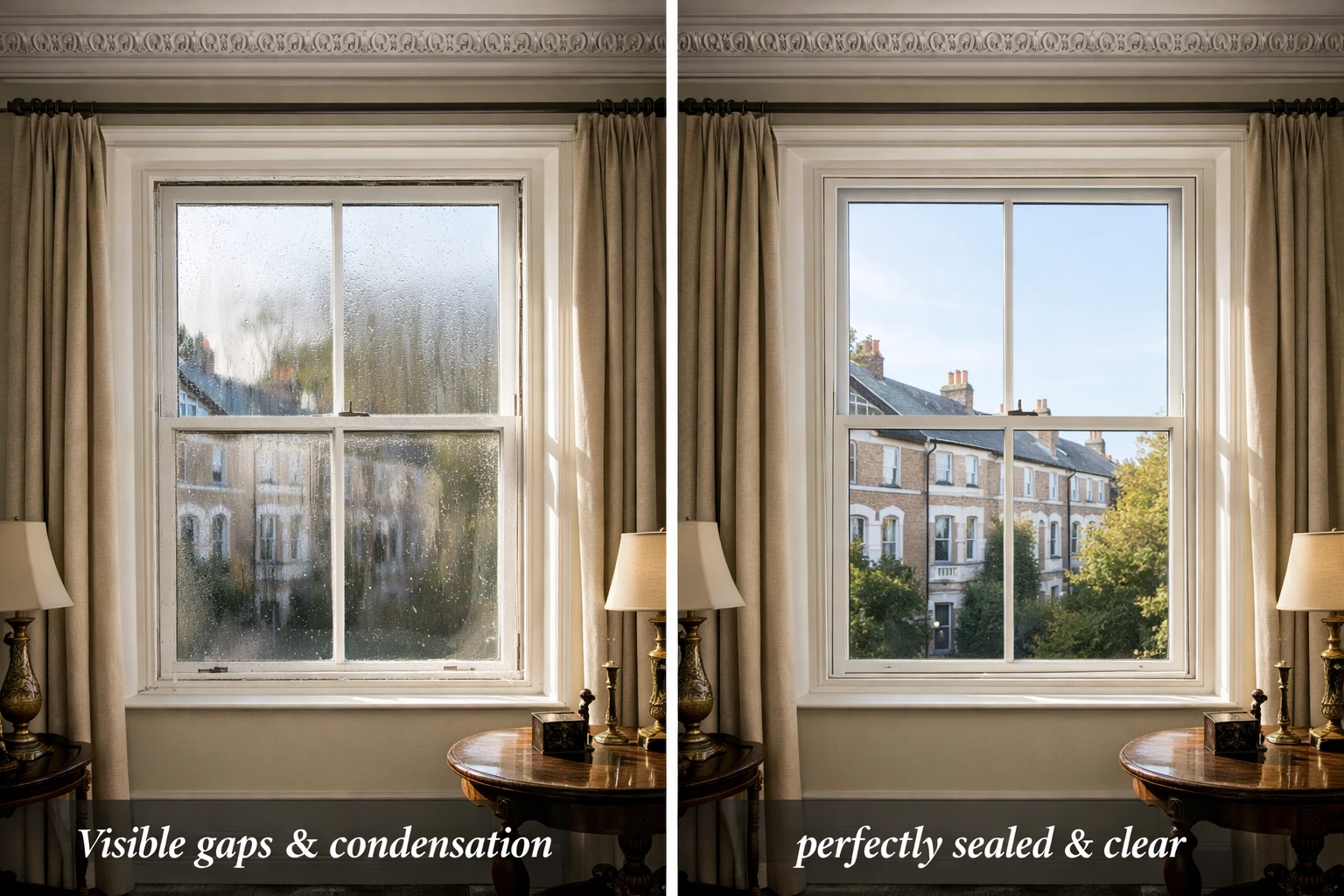
You Shouldn't Have to Choose Between Location and Sleep
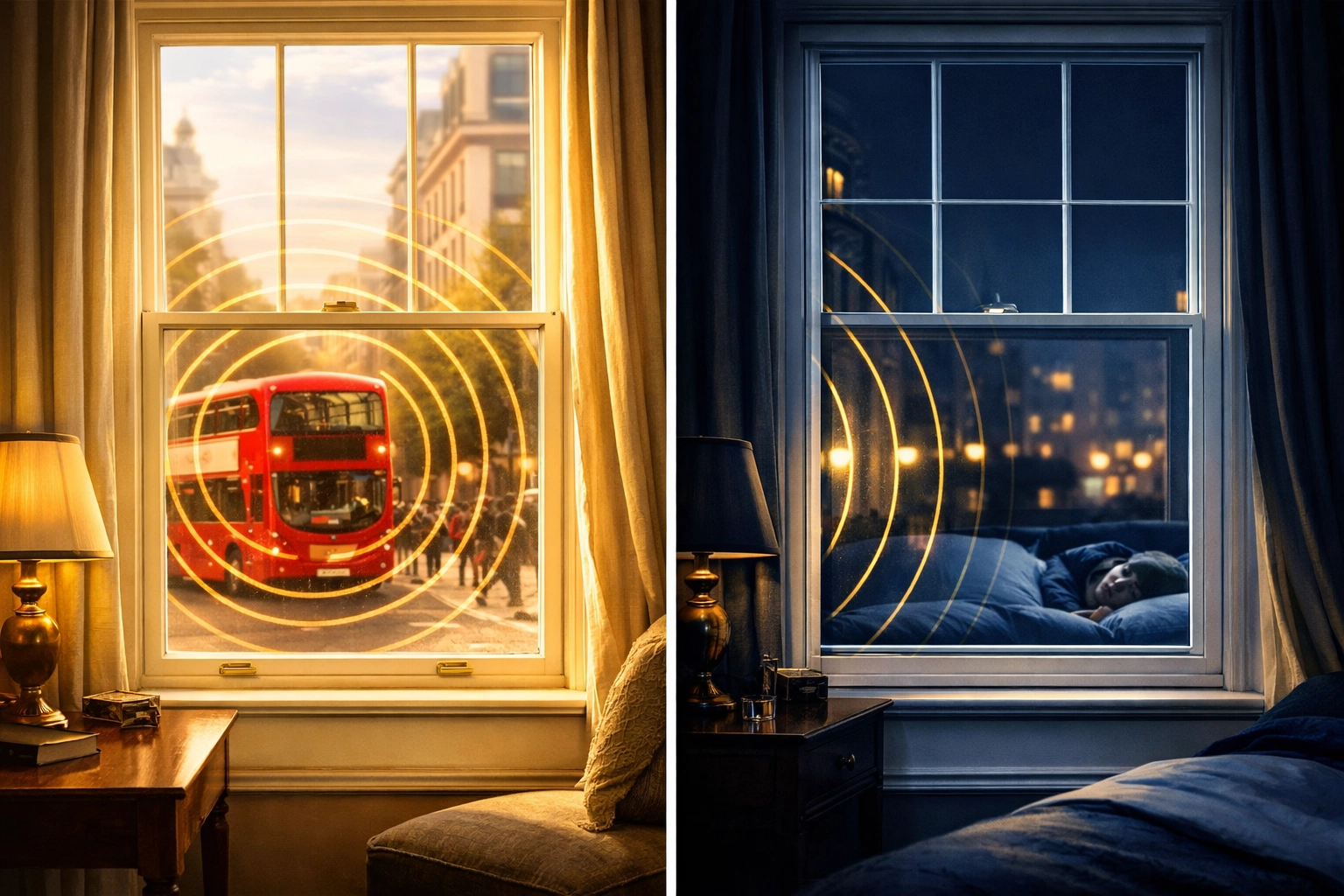
If you live on Park Lane, Euston Road, or anywhere near the North Circular, you already know the trade-off. You get the postcode, the views, the convenience — and the relentless rumble of buses, taxis, and delivery vans at 5 AM.
You've tried everything. Blackout curtains. White noise machines. Earplugs that fall out at 3 AM. But nothing actually stops the noise at the source: your windows.
Here's the truth: your single-glazed sash windows weren't designed for 2026 London traffic. They were built in 1890 when the loudest thing outside was a horse and cart. Today, they're letting in 70-85 decibels of chaos, and it's ruining your sleep, your focus, and your sanity.
Secondary glazing changes that. Not by a little. By a lot.
Let's Talk Decibels (Without the Physics Degree)
Decibels (dB) measure sound intensity. But the scale isn't linear — it's logarithmic. That means a 10 dB increase sounds twice as loud to your ears.
Here's what city noise actually sounds like in numbers:
Now here's the magic: reducing noise by 45-50 dB takes a screeching main road and turns it into library-level quiet. That's the difference between lying awake at 2 AM listening to sirens and actually sleeping through the night.
Secondary glazing — especially with the right glass — can deliver exactly that.
Noise Reduction Visualiser
Drag to set your outside noise level
75 dB
Heavy Traffic
25 dB
Whisper / Rustling Leaves
Recommended: 10.8mm Acoustic Laminate Glass (maximum protection)
How Secondary Glazing Actually Silences the City
Unlike double glazing (where two panes are sealed into one unit), secondary glazing creates a completely independent second window on the inside of your existing frame.
The secret weapon? The air gap.
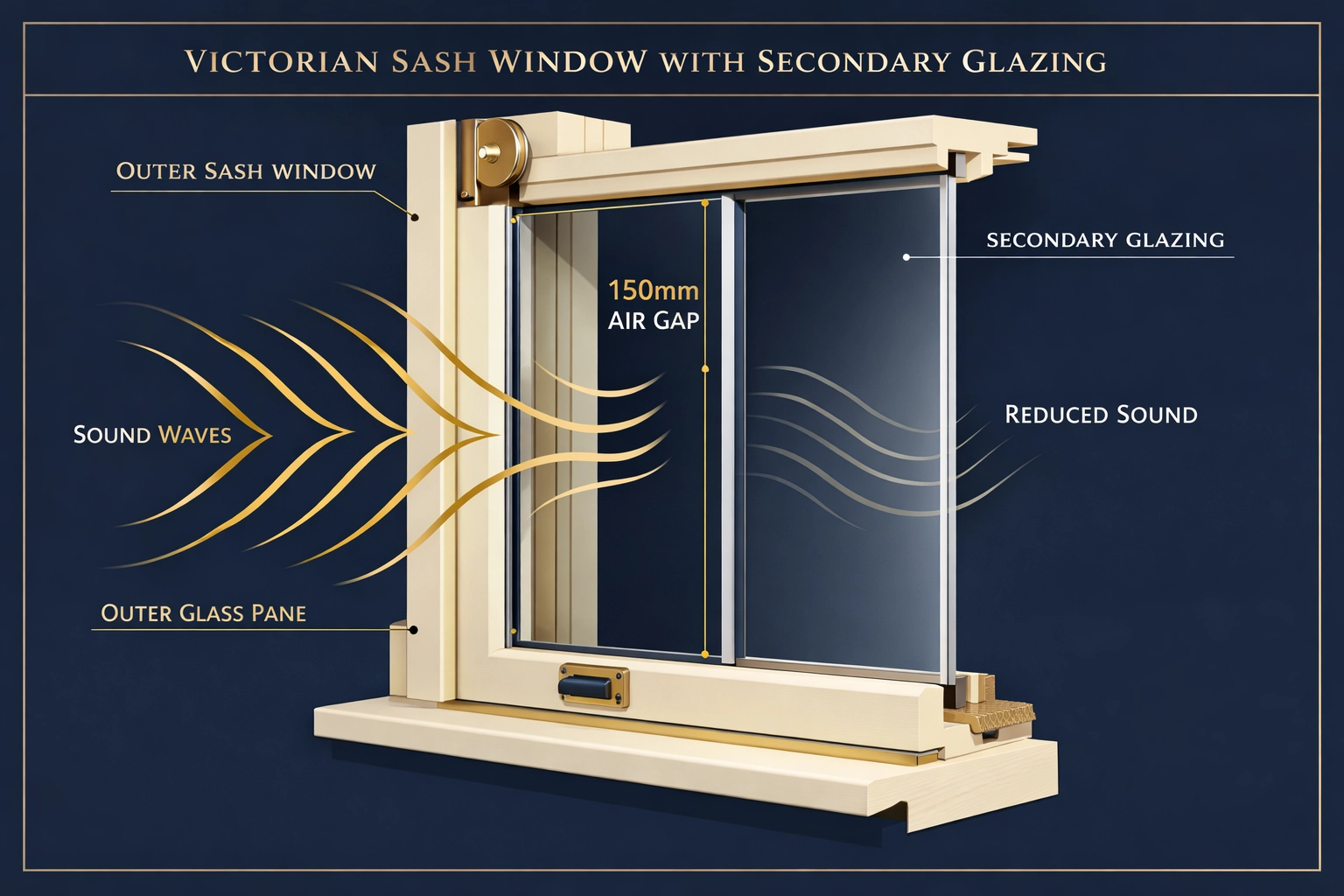
When sound waves hit your outer window, some bounce back, and some pass through. But then they have to cross a 100-150mm void of dead air before hitting the inner pane. That air cavity "decouples" the vibrations. The sound energy dissipates. By the time it reaches your room, it's a fraction of its original strength.
Think of it like this: shouting through a single sheet is loud. Shouting through two sheets with a pillow between them? Barely audible.
The wider the gap, the better the performance. That's why our systems use a minimum 100mm cavity — far larger than the 16-20mm you get in standard double glazing. More space = more sound absorption.
The 10.8mm Acoustic Laminate: Your Heavy Hitter
Not all glass is created equal. Standard 4mm glass will reduce some noise, but if you're living on a main road or under a Heathrow flight path, you need something with serious mass.
Product Spotlight
10.8mm Acoustic Laminate Glass
This isn't your average pane. It's two layers of glass with a special acoustic PVB interlayer sandwiched between them. That interlayer is designed to absorb and dampen low-frequency rumble — the kind of noise that standard glass just lets through. We're talking lorries, buses, motorbikes, and those annoying bass-heavy exhausts that shake your teacup at 11 PM.
Up to 54 dB
Noise Reduction
4mm + PVB + 6.8mm
Glass Composition
Low-mid (traffic)
Frequency Range
Let's put that in perspective. A bus roaring past at 85 dB gets knocked down to 31 dB inside your room. That's quieter than a whisper. That's the sound of nothing.
For residents in Kensington, Marylebone, or anywhere along the Westway, this is the upgrade that changes everything.

What Better Sleep Actually Feels Like
Let's be honest: this isn't really about decibels. It's about what happens when the noise finally stops.
It's about waking up at 7 AM because your alarm went off — not because a bin lorry idled outside your bedroom at 5:30.
It's about coming home after a long day and actually feeling like your flat is a sanctuary, not an extension of the street below.
It's about being able to work from home without wearing headphones just to concentrate.
The Health Impact
Chronic noise exposure doesn't just disrupt sleep. It raises cortisol levels, increases blood pressure, and — over time — chips away at your mental health. Living in a loud environment is exhausting in ways you don't even realise until it stops.
When clients call us after installation, the feedback is always the same: "I didn't realise how stressed I was until the noise disappeared."
That's what we're really selling. Peace. Quiet. A home that actually feels like home.
The Numbers Don't Lie
Here's what secondary glazing with acoustic glass delivers:
70-80%
Noise reduction in most urban settings
45-54 dB
Drop in sound levels with proper installation
100-150mm
Air gap for maximum acoustic performance
10.8mm
Laminate glass for low-frequency traffic rumble
Compare that to double glazing replacement, which typically reduces noise by 30-40 dB and costs double the price. Plus, if you're in a conservation area or a listed building, replacing your original sashes isn't even an option.
Secondary glazing works with your existing windows. No planning permission headaches. No ruining your period features. Just results.

Why DIY Kits Won't Cut It
You've probably seen the magnetic film kits on Amazon. They're cheap. They're quick. And they don't work.
Here's why: gaps.
Sound will find the tiniest opening and pour through. If your secondary glazing isn't sealed with millimetre-perfect precision, you'll still hear the traffic. Those magnetic strips peel. They warp. They let air (and noise) leak in.
Professional installation means bespoke frames built to your exact window dimensions, sealed with acoustic-grade gaskets, and fitted to the interior staff bead. No gaps. No rattles. No compromise.
Want the full comparison? Read our in-depth guide: DIY Secondary Glazing Kits: Is the Saving Worth the Noise?
Who Needs This?
If you're reading this and nodding along, chances are you're already living with the problem. Secondary glazing is a game-changer for:
Main road residents
Park Lane, Euston Road, the A40, Marylebone Road — anywhere with constant HGV and bus traffic.
Flight path properties
Living under Heathrow or City Airport's approach routes.
Urban apartments
Ground-floor flats near pubs, restaurants, or late-night venues.
Shift workers
Anyone who needs to sleep during the day when the city is at its loudest.
Families
Parents trying to protect kids' sleep (and their own sanity).
If you've ever Googled "how to block traffic noise" at 3 AM, this is for you.
Ready to Reclaim Your Peace?
We get it. You love your location. You love your flat. You just don't love the noise.
The good news? You don't have to move to the countryside to get a good night's sleep.
Get a Silent Night
Request a free acoustic survey. We'll measure the noise levels at your property and recommend the exact glass specification you need.
Or, if you're in a listed building or conservation area and want to talk through your options, book a free survey. We'll measure up, show you samples, and give you a no-pressure quote.
Because honestly? Life's too short to live in a drum kit.
Frequently Asked Questions
Why a Free Acoustic Survey Is Essential
Every property is different. The noise sources, window sizes, building construction, and even the room layout all affect which acoustic solution will work best. A site survey lets us:
Measure actual noise levels
We take dB readings at your windows to understand exactly what you're dealing with — not just guess from the road type.
Assess your existing windows
The condition, type, and age of your sash or casement windows determines the optimal secondary glazing system and frame configuration.
Specify the right glass
Based on your noise profile, we recommend the optimal glass — from 6.4mm laminated for moderate noise to 10.8mm acoustic laminate for the most demanding environments.
Check cavity depth
We measure the available reveal depth to ensure we can achieve the maximum possible air gap for acoustic performance.
Heritage compliance
For listed buildings and conservation areas, we advise on the installation method that satisfies conservation officers while maximising soundproofing.
Related Reading
Preserving a Heritage Home?
If your property is listed or in a conservation area, our companion guide covers planning approval, conservation officer expectations, and how we install without altering original fabric.
Read the Heritage Guide