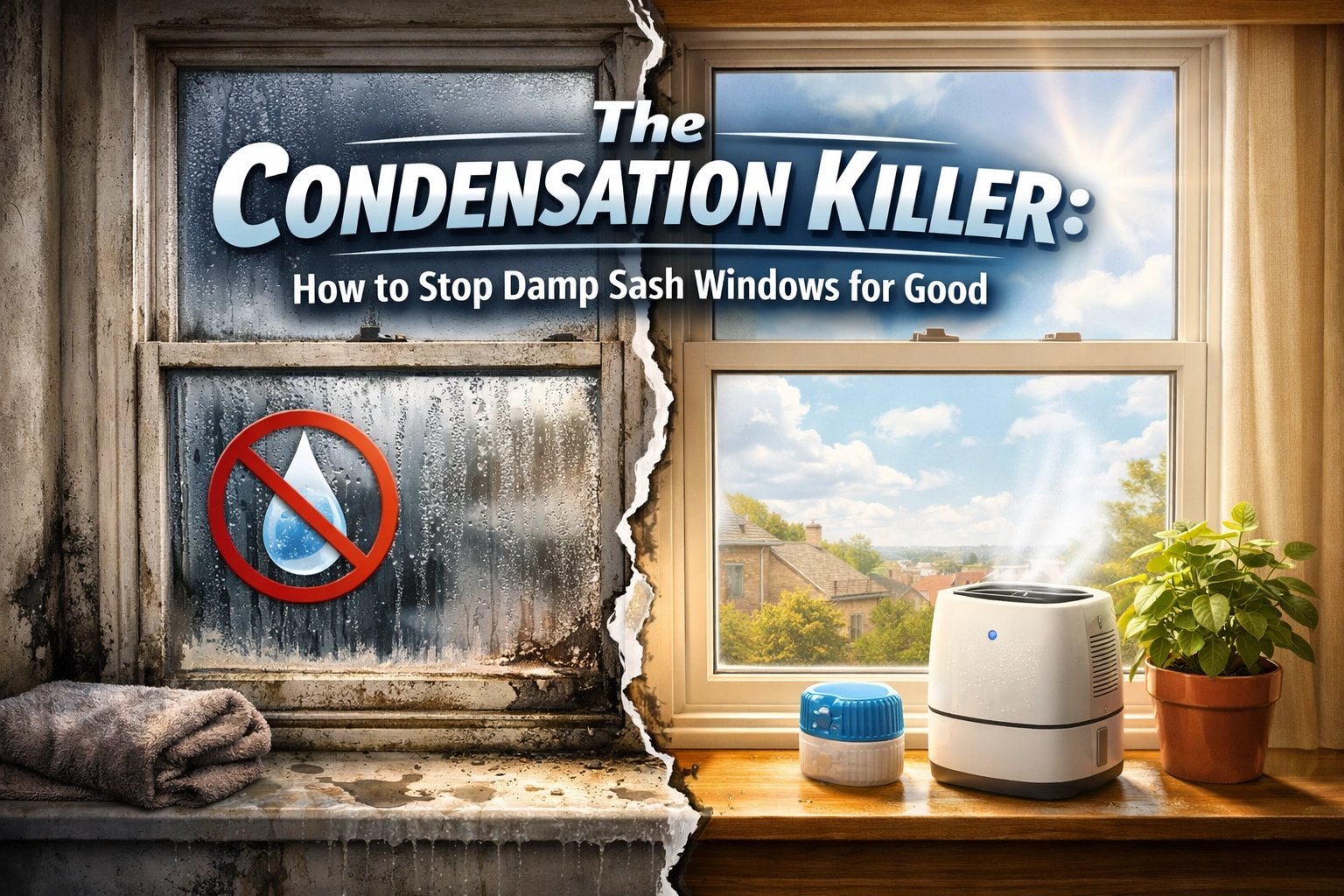
If you own a Georgian townhouse in Kensington or a Victorian villa in Mayfair, you already know the drill. Your windows are freezing, your energy bills are criminal, but touching anything means navigating a maze of heritage regulations that would make Kafka weep.
Here's the good news: secondary glazing is the one upgrade that actually works with conservation rules instead of against them. Let's break down exactly what you need to know about planning permission, Listed Building Consent, and why Historic England literally recommends this solution.
The Heritage Conflict
Listed building ownership is a paradox. The very features that make your property valuable — those original sash windows, the hand-blown glass, the timber frames crafted by Georgian joiners — also make it expensive to heat and impossible to insulate using conventional methods.
Double glazing? Almost certainly refused for a listed property. UPVC replacements? Your conservation officer will have a coronary. Triple glazing? You may as well suggest demolishing the facade.
The problem is real: single-glazed sash windows lose heat at roughly five times the rate of modern double glazing. In a typical Grade II townhouse, your windows account for 30-40% of total heat loss. That translates to energy bills that would shock the original Victorian occupants — even allowing for inflation.
The Listed Building Dilemma
You need thermal performance that meets 2026 standards. You need to preserve windows that were crafted 150-250 years ago. And you need to keep your conservation officer happy. Secondary glazing is the only solution that satisfies all three requirements simultaneously.
Planning Permission vs Listed Building Consent (The Bit Everyone Gets Wrong)
Most people think these are the same thing. They're not.
Planning Permission controls what your building looks like from the outside. It's about streetscape, visual impact, and whether your neighbours will complain about your new conservatory.
Listed Building Consent (LBC) is different. It protects the historic fabric of your property: the original windows, the plasterwork, the fireplaces. It's about preservation, not aesthetics.
Here's why this matters for secondary glazing: because the installation happens on the internal face of your existing windows and doesn't touch the original frames, it usually sidesteps both requirements. Your Grade II townhouse? Probably fine without consent. Your Grade I manor? You'll want a conversation with your conservation officer first, but you're still in a much better position than someone trying to rip out original sashes for double glazing.
Planning Permission | Listed Building Consent | |
|---|---|---|
| What it controls | External appearance and streetscape | Historic fabric and original features |
| Applies to | All buildings in conservation areas | Listed buildings only (Grade I, II*, II) |
| Secondary glazing needed? | Rarely required | Sometimes (Grade I, II*) |
| Why rarely needed | Installation is internal — no external change | System is reversible — no alteration to fabric |
| Double glazing comparison | Almost always refused | Almost always refused |
Why Historic England Loves Secondary Glazing
Historic England — the government body that literally writes the rules for listed buildings — has gone on record saying secondary glazing is the preferred solution for heritage properties. Why?
Key Principle: Reversibility
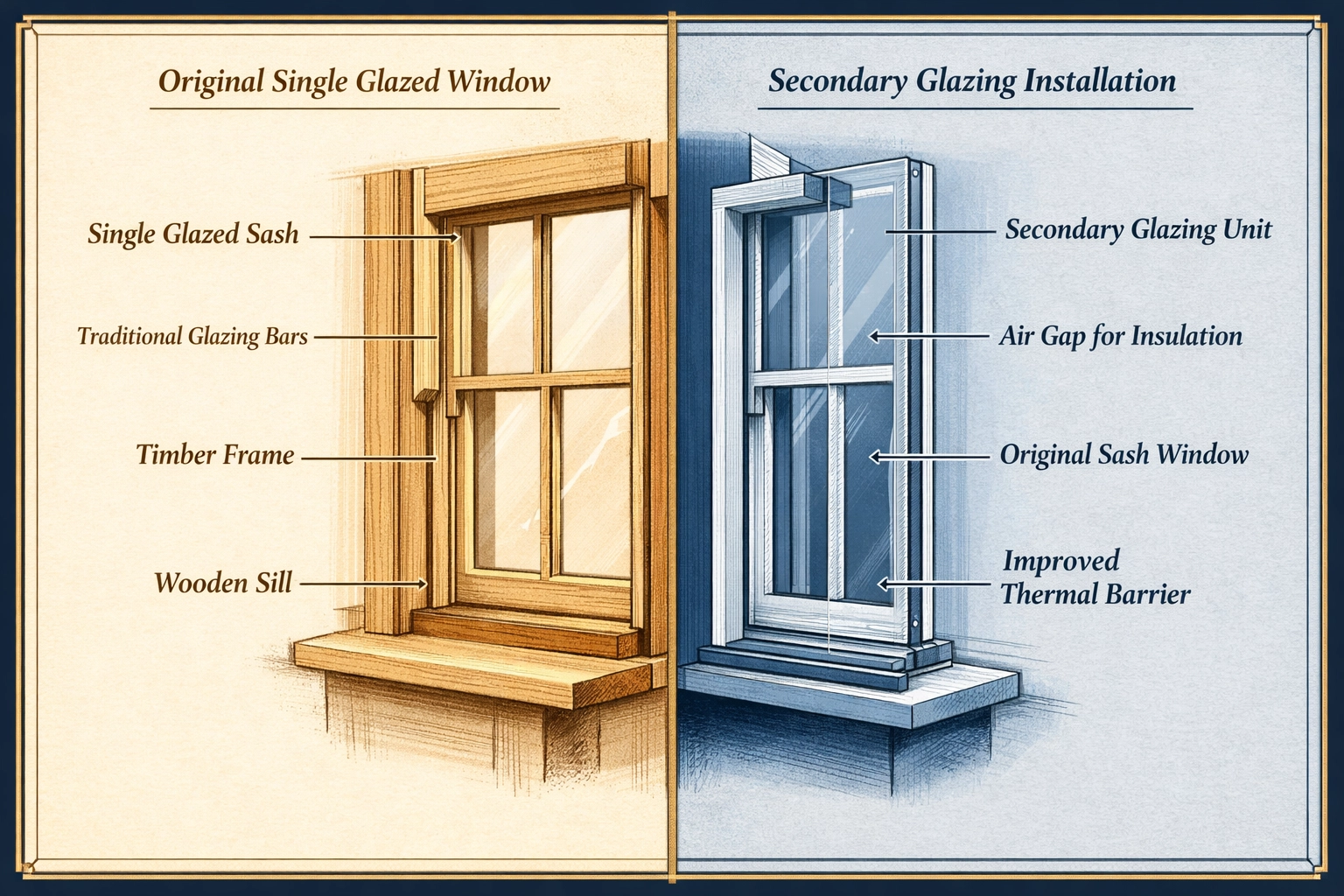
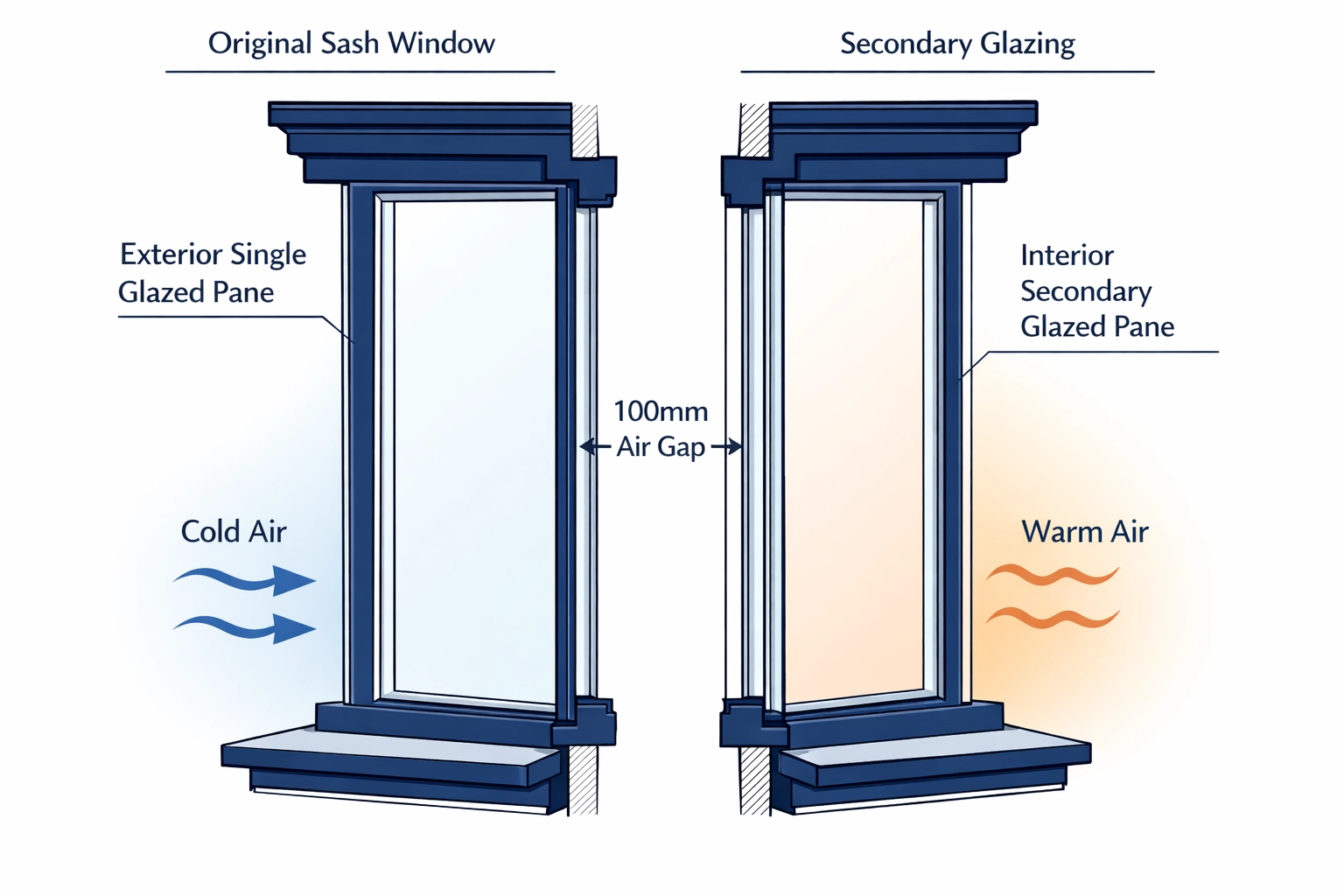
Because our systems are fitted to the interior staff bead and not the window itself, they are considered a reversible alteration — the holy grail for Heritage Officers.
Your great-great-grandchildren can take it out in 2126 without leaving a single screw hole in the original window frame. For conservation officers, this is gold. Listed buildings are supposed to be preserved for future generations, not permanently altered because we got cold in 2026.
It's Invisible From Outside
Walk past a properly installed secondary glazing system from the street and you won't see a thing. The original sash windows look exactly as they did in 1850. This is why planning permission rarely comes into play — you're not changing the external appearance.
It Actually Works
Unlike those plastic film kits your neighbour tried, professional secondary glazing cuts heat loss by up to 60% and practically eliminates condensation. Historic England wouldn't recommend something that didn't deliver results.
The Grade System: What You Actually Need to Know
Not all listed buildings are created equal. The grade of your listing changes what hoops you need to jump through.
Grade II Listed
92% of all listed buildings in the UK
If you're in this category, internal secondary glazing is usually considered “permitted development.” Translation: you probably don't need formal consent. But always check with your local conservation officer first. Some councils are stricter than others, and a five-minute phone call now beats a five-month enforcement battle later.
Grade II* (Two Star) Listed
Particularly important buildings of more than special interest
Think: significant architectural features, important historical connections, or rare examples of a particular style. You're still likely fine with internal secondary glazing, but your conservation officer will want more detail about the installation method. This is where having a professional installer who can provide technical drawings becomes essential.
Grade I Listed
The top 2.5% — buildings of exceptional interest
Grand country houses, important public buildings, or particularly fine period examples. If you own a Grade I listed property, you already know you can't sneeze without checking if it needs consent. For secondary glazing, you'll definitely need to consult your conservation officer, but here's the thing: they're usually supportive because the alternative — leaving your Tudor manor to freeze — isn't exactly great for preservation either.
Conservation Areas: The Double Whammy
Live in a conservation area and own a listed building? You're dealing with two sets of rules. The good news: secondary glazing is so unobtrusive that it typically clears both hurdles.
Conservation area rules focus on external appearance. Since your secondary glazing sits behind your existing windows, it's invisible from the street. Listed building rules focus on preserving original fabric. Since you're not touching the original windows, you're preserving everything exactly as it was.
This is why areas like Chelsea, Bloomsbury, and Hampstead — where practically every street is both a conservation area and full of listed buildings — see so many secondary glazing installations. It's the path of least regulatory resistance.
What Your Conservation Officer Actually Wants to See
If you do need to apply for Listed Building Consent, here's what makes the process smooth:
Technical Drawings
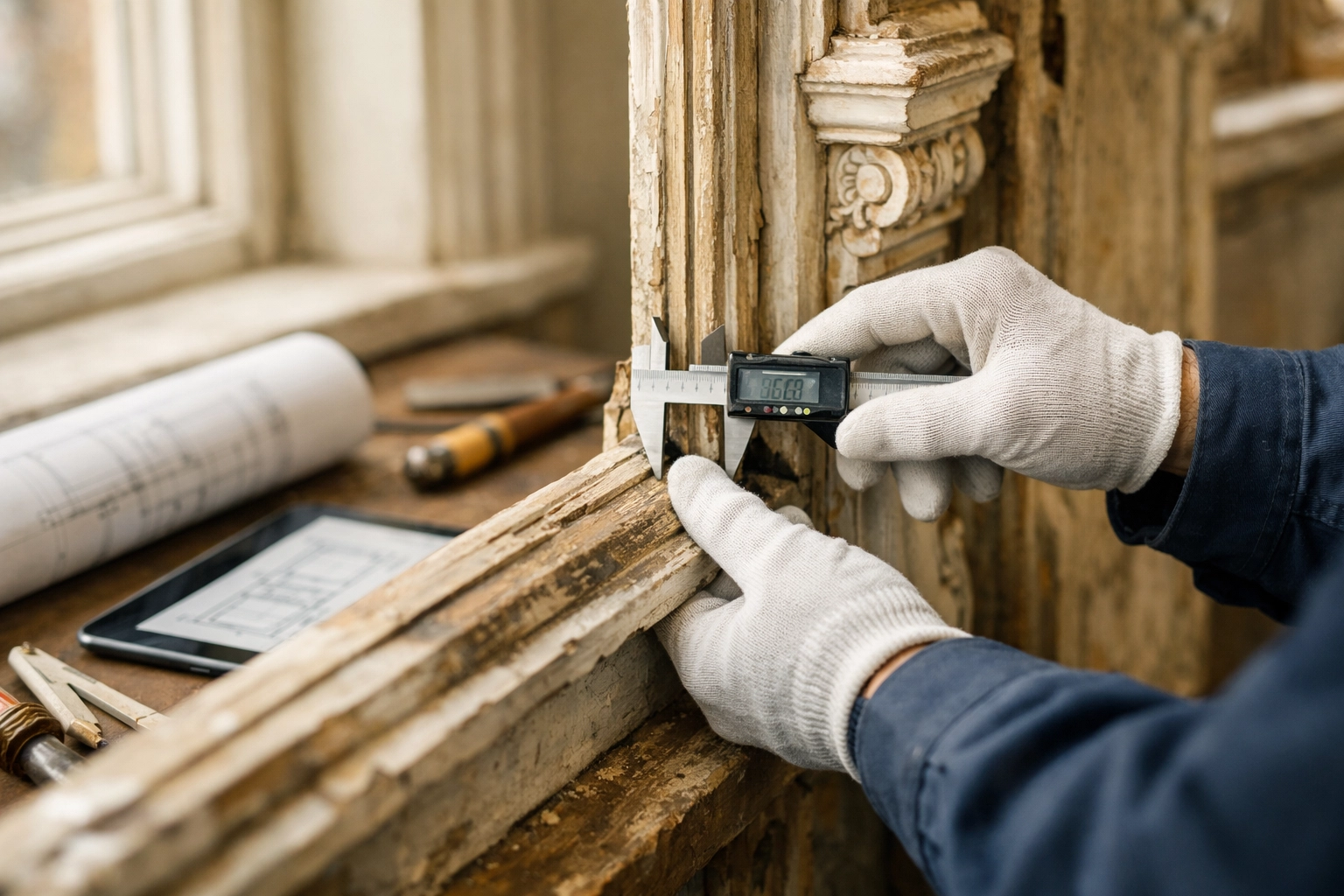
Precise measured specifications showing exactly how the secondary glazing fits within your existing window reveals. Not sketches — professional technical drawings.
Material Specifications
Frame type, glass specification, fixing method. Heritage officers want to know you're using appropriate materials that won't damage original windows.
Photographic Evidence
Before photos showing the current state of your windows, demonstrating that you're preserving, not destroying, historic features.
Reversibility Statement
Written confirmation that the entire system can be removed without trace. This is usually the clincher that gets consent approved.
Most professional installers who specialise in heritage properties can provide all of this as standard. It's why using someone who's done this before matters — they know exactly what your local planning authority wants to see.
The London Premium: Why Kensington and Mayfair Lead the Way
Walk down any street in Belgravia, Knightsbridge, or Mayfair and you're looking at millions of pounds worth of Georgian and Victorian architecture. These areas have some of the strictest planning rules in the country, but they also have some of the highest adoption rates for secondary glazing.
Why? Because wealthy property owners in prime central London have worked out that secondary glazing is the only way to make a Grade II listed townhouse liveable without starting a three-year battle with Westminster Council.
The Prime Central London Calculation
Spend £3,000–£8,000 on a reversible, consent-friendly upgrade that cuts your heating bills by half — or spend £150,000 on a planning consultant who'll probably tell you to install secondary glazing anyway.
If you're in one of these areas and want to see what your project might cost, our secondary glazing cost calculator gives you an instant estimate based on your window sizes and property type.
The DIY Trap (And Why It Fails Heritage Tests)
You'll see magnetic secondary glazing kits online for a few hundred quid. They claim to be “perfect for listed buildings” because they don't need screws.
Here's the problem: conservation officers can tell. The frames are usually white PVC that looks nothing like your original joinery. The fit is loose because you're working with approximate measurements. And when you apply for consent (which you should), the application gets rejected because it looks like you bought it on Amazon.
Professional bespoke secondary glazing is made to match your existing windows — the frame colour, the glazing bar patterns, even the handle style. It's custom-fitted to within 2mm tolerances. This isn't just about aesthetics; it's about showing respect for the historic fabric of your building, which is exactly what conservation officers want to see.
Read our detailed DIY vs Professional comparison for the full acoustic data and 10-year cost breakdown.
What Happens If You Skip Consent When You Needed It
Let's be clear: most internal secondary glazing doesn't require Listed Building Consent. But if you're in that minority that does (usually Grade I or unusual circumstances), skipping the process isn't just risky — it's actually illegal.
Enforcement action can include:
- An order to remove the installation at your expense
- Criminal prosecution (rare, but possible under the Planning (Listed Buildings and Conservation Areas) Act 1990)
- A listed building enforcement notice that stays on your property records
- Serious complications when you try to sell — buyers' solicitors will flag it
The frustrating thing is that if you'd just asked first, you'd probably have gotten consent anyway. Secondary glazing applications have some of the highest approval rates of any heritage application because they tick every conservation box.
Your Next Steps
If you're ready to upgrade your listed property without triggering a planning nightmare:
Contact your local conservation officer
for an informal chat. Most are surprisingly helpful when you approach them before installing anything.
Get a professional heritage survey
from an installer who specialises in listed properties. They'll measure everything, explain your options, and provide the technical drawings you need for any applications.
Budget realistically
Bespoke secondary glazing for a listed building costs more than off-the-shelf solutions, but it's still a fraction of what you'd pay for the planning battles that come with trying to install double glazing.
Document everything
Keep copies of all correspondence, consent applications, and installation specifications. Future owners will thank you.
Your 200-year-old windows deserve to be preserved. You deserve not to freeze. Secondary glazing lets you have both.
Heritage property owners
Book Your Free Heritage Survey
We'll survey your listed property, liaise with your conservation officer if needed, provide technical drawings, and handle the entire LBC process — at no cost until you decide to proceed.
Frequently Asked Questions
Why a Heritage Site Survey Is Essential
Every listed building is unique. The right secondary glazing solution depends on factors that can only be assessed in person by someone who understands both the technical requirements and the heritage regulations:
Listed status and local authority requirements
We check your specific listing grade and consult with your local conservation team to determine exactly what permissions are needed — before any work begins.
Original window assessment
We assess the condition, materials, and historical significance of your existing windows to ensure secondary glazing complements rather than compromises them.
Technical drawings for LBC applications
If consent is needed, we produce the precise measured drawings and material specifications that conservation officers require — included as standard.
Frame colour and profile matching
We specify frames that match your existing joinery — whether that's Victorian mahogany, Georgian pine, or Regency softwood — so the installation is invisible.
Acoustic and thermal specification
Based on your noise exposure, heating requirements, and budget, we recommend the optimal glass type — from 4mm toughened to 10.8mm acoustic laminate.