Secondary Glazing Hampstead NW3
Professional secondary glazing installation in Hampstead's prestigious NW3 postcode. Specializing in period properties, conservation areas, and luxury homes with expert noise reduction and thermal efficiency solutions.
Hampstead Secondary Glazing Specialists
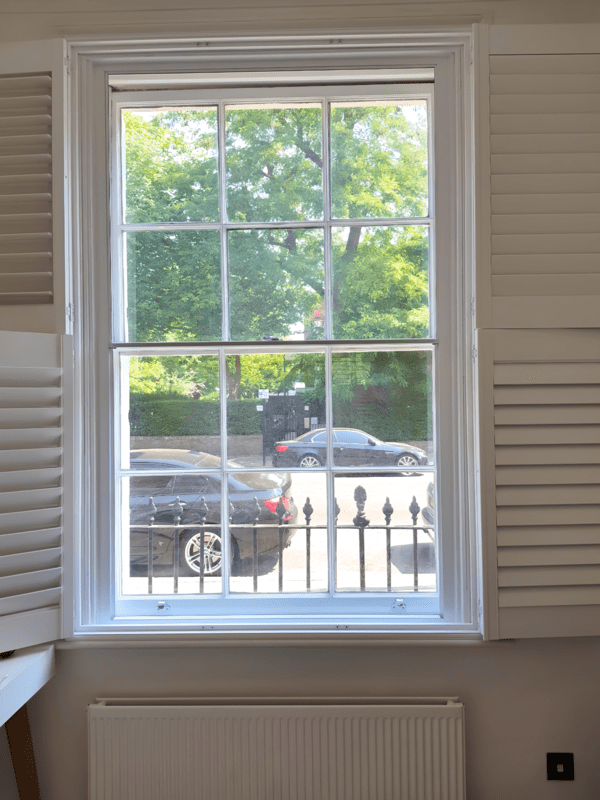
Expert Installation in Hampstead's Historic Properties
Specialized in Victorian and Georgian properties throughout NW3
Conservation area approved solutions for listed buildings
Noise reduction from Hampstead High Street and Finchley Road
Thermal efficiency improvements for period sash windows
Hampstead Heritage & Conservation Expertise
Hampstead contains more listed buildings per acre than almost any London borough. Camden Council's conservation team applies rigorous standards -- we've built trusted relationships with their officers over hundreds of installations.
The Hampstead Conservation Area
London's largest conservation area encompasses the historic village core around Flask Walk, Well Walk, and Church Row. Church Row (c.1720) is widely considered London's finest surviving Georgian terrace -- its original Crown glass panes are irreplaceable. We've installed secondary glazing in five Church Row properties, working with Camden's heritage officer to ensure each installation is fully reversible. The Grade I listed Fenton House nearby required English Heritage sign-off for our works.
Key streets: Church Row, Flask Walk, Well Walk, Holly Walk, Mount Vernon, Hampstead Grove
The South Hill Park Conservation Area
The grand Victorian houses along South Hill Park and Parliament Hill face dual noise challenges: Hampstead Heath Road traffic and the Gospel Oak to Barking London Overground line. The Edwardian red-brick terraces (c.1890-1910) feature characteristic bay windows with decorative leaded fanlights. Our secondary glazing panels are custom-shaped to follow these complex fanlight profiles, maintaining the full decorative impact from outside while achieving 40+ dB noise reduction.
Key streets: South Hill Park, Parliament Hill, Nassington Road, Tanza Road, South Hill Park Gardens
Downshire Hill & Keats Grove
This literary quarter includes the Keats House Museum (where John Keats wrote 'Ode to a Nightingale') and a cluster of early Regency villas from the 1810s-1820s. The charming scale of these properties means standard glazing solutions often look clumsy. Our bespoke micro-profile frames (just 18mm visible width) were developed specifically for properties of this intimate character. Several Downshire Hill residents have commissioned us after seeing our work at neighbouring properties.
Key streets: Downshire Hill, Keats Grove, John Street, Pilgrim's Lane, Willow Road
Finchley Road Corridor
The A41 Finchley Road is one of North London's busiest arterial routes, carrying heavy traffic between the M1 motorway and Central London. Properties on Arkwright Road, Redington Road, and the residential streets branching off Finchley Road experience sustained noise levels of 72+ dB. These large Edwardian and 1930s houses have substantial windows that benefit enormously from our acoustic secondary glazing, often achieving the largest measurable improvement of any installation type we perform.
Key streets: Finchley Road, Arkwright Road, Redington Road, Platt's Lane, West Heath Road
Hampstead Village NW3
- Church Row (Georgian Grade I)
- Flask Walk & Well Walk
- Holly Bush Hill & Holly Mount
- Heath Street & High Street
South & West Hampstead
- Belsize Park mansion blocks
- Swiss Cottage Edwardian villas
- Finchley Road corridor properties
- West End Lane Victorian terraces
Heritage Landmarks
- Kenwood House (English Heritage)
- Fenton House (National Trust)
- Keats House Museum
- 2 Willow Road (Erno Goldfinger)
Ready to Transform Your Hampstead Property?
Get a free, no-obligation quote for secondary glazing installation