Victorian Grandeur, Modern Silence
Secondary Glazing in Notting Hill & St John's Wood
Preserving the iconic pastel terraces of the Ladbroke Conservation Area. Acoustic insulation for quiet, leafy streets in St John's Wood, protecting against through-traffic noise on Wellington Road and Abbey Road.
Book a Private Heritage Survey80% Noise Reduction
Up to 45 dB attenuation
60% Heat Retention
U-value improvement guaranteed
Grade I & II Listed Approved
Fully reversible installation
Conservation & Planning
Preserving the Historic Fabric
Both Notting Hill and St John's Wood sit within tightly controlled conservation areas managed by RBKC and Westminster respectively. We understand the specific Article 4 directions that control window alterations in these sensitive zones and work with residents' associations including the Ladbroke Association and the St John's Wood Society to ensure every installation meets their neighbourhood design codes.
The Ladbroke Conservation Area
One of London's most significant Victorian developments, the Ladbroke Estate (c.1840-1870) features sweeping crescents of stucco-fronted villas around private communal gardens. Properties on Ladbroke Grove, Kensington Park Gardens, and Elgin Crescent have distinctive Italianate detailing with tall first-floor windows and original timber sash mechanisms. RBKC's Article 4 direction means even internal window works must be sympathetic. Our slim 24mm aluminium frames are virtually invisible behind the reveals. The iconic pastel-painted facades of Portobello Road and Westbourne Park Road are among London's most photographed -- our glazing preserves their character completely.
Key streets: Ladbroke Grove, Kensington Park Gardens, Elgin Crescent, Lansdowne Crescent, Stanley Gardens, Clarendon Road, Lansdowne Road
Portobello Road & the Westway Corridor
Portobello Road's famous market brings 100,000+ visitors every Saturday, generating significant noise for the Victorian terraced houses lining the road. The Westway elevated motorway adds a constant low-frequency rumble that only professional laminated glass can adequately attenuate. We've installed acoustic secondary glazing in 20+ Portobello-facing properties, allowing residents to enjoy silence even during peak market hours. The Pembridge Conservation Area's grand Victorian villas along Pembridge Square (c.1855-1870) present a specialist glazing challenge -- our curved-head secondary glazing panels follow the original Victorian arched fanlights precisely.
Key streets: Portobello Road, Colville Terrace, Talbot Road, Westbourne Park Road, Blenheim Crescent, Pembridge Square, Pembridge Villas, Chepstow Place
St John's Wood Conservation Area & the Eyre Estate
St John's Wood was London's first suburb of semi-detached villas, developed from the 1810s on the Eyre Estate. The area retains its distinctive low-rise character with substantial detached and semi-detached houses set in large gardens -- a rarity in central London. Hamilton Terrace, one of London's most expensive residential streets, features Early Victorian villas with tall sash windows that require our counterbalanced panel systems. Wellington Road and the A41 Finchley Road create significant noise corridors that penetrate the otherwise quiet residential streets.
Key streets: Hamilton Terrace, Abbey Road, Avenue Road, Wellington Road, Circus Road, Acacia Road, Cavendish Avenue, Carlton Hill, Marlborough Place
Regent's Park Perimeter & Lord's Cricket Ground
Properties along the Regent's Park perimeter on the Outer Circle and Park Road benefit from the park's greenery but face significant traffic noise from the arterial roads. The John Nash terraces along the park (1826-1827) are Grade I listed and among London's most architecturally significant buildings. Lord's Cricket Ground generates match-day noise that affects properties on St John's Wood Road and Grove End Road. Our acoustic surveys assess both constant traffic noise and intermittent event noise to recommend the optimal glass specification for each property.
Key streets: Outer Circle, Park Road, St John's Wood Road, Grove End Road, Prince Albert Road, Charlbert Street, Allitsen Road
The Invisible Difference
Ultra-Slim Frames, Invisible Results
Our 24mm aluminium frames sit precisely within the window reveal, aligning with original sash meeting rails. The result is secondary glazing that nobody can see.
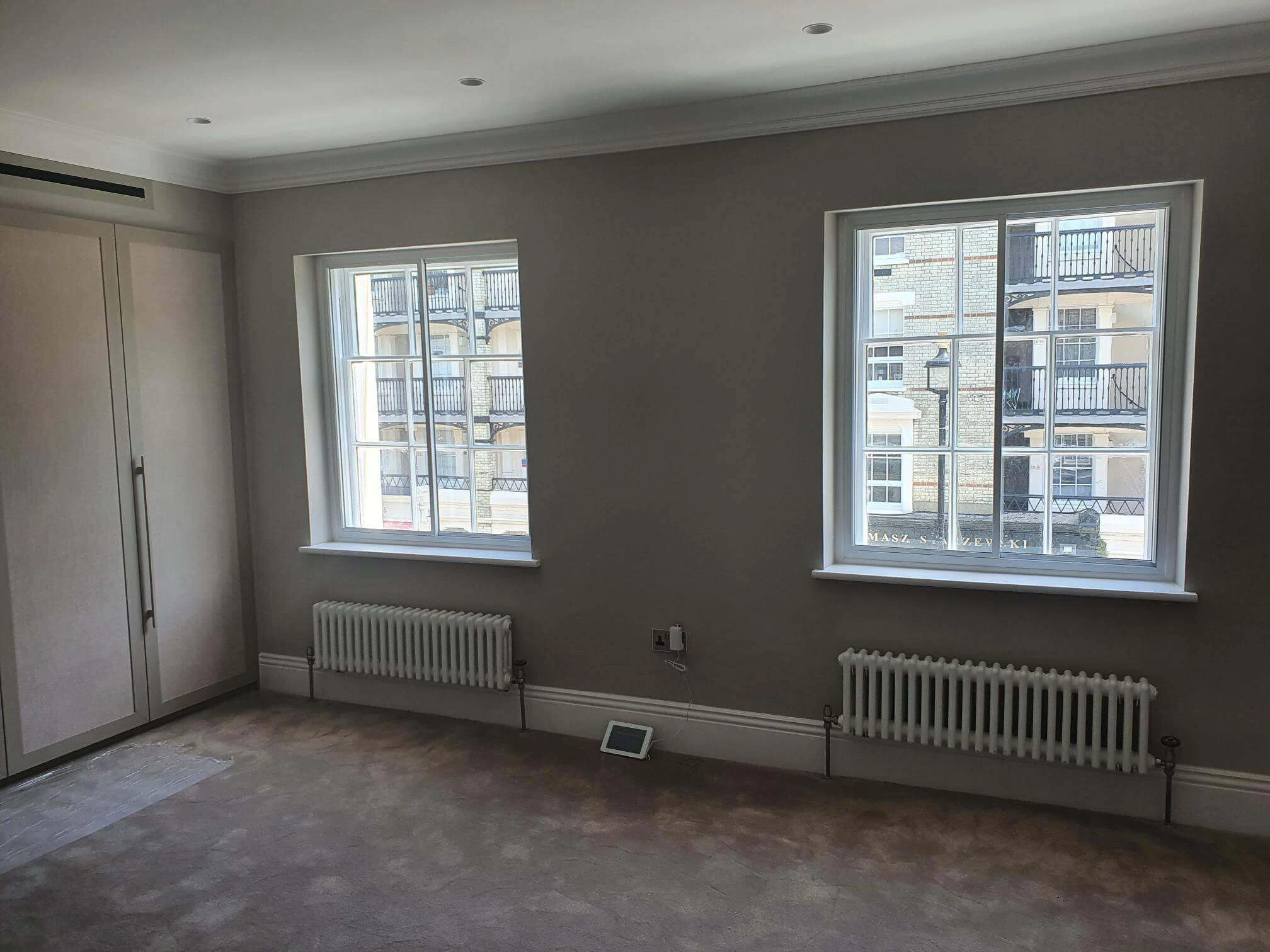
Ladbroke Conservation Area, invisible behind Italianate window reveals
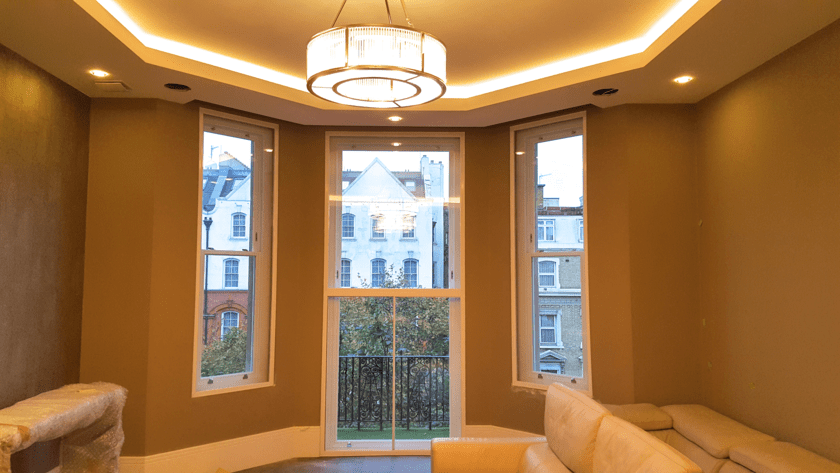
Hamilton Terrace villa, counterbalanced system for 2.4m sash windows
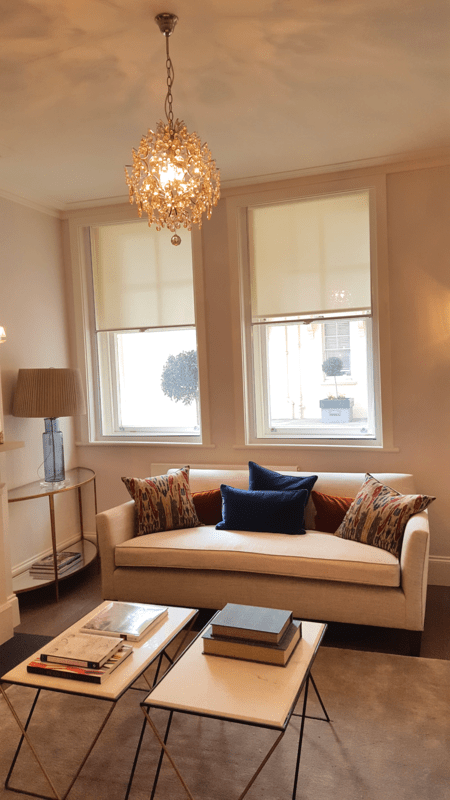
Grade I listed Nash terrace, fully reversible heritage installation
Complimentary Consultation
Experience the Silence in Your Notting Hill & St John's Wood Property
Our heritage surveyor will visit your property, measure every window, assess the specific noise sources, and provide a detailed written specification. No obligation. No hard sell.