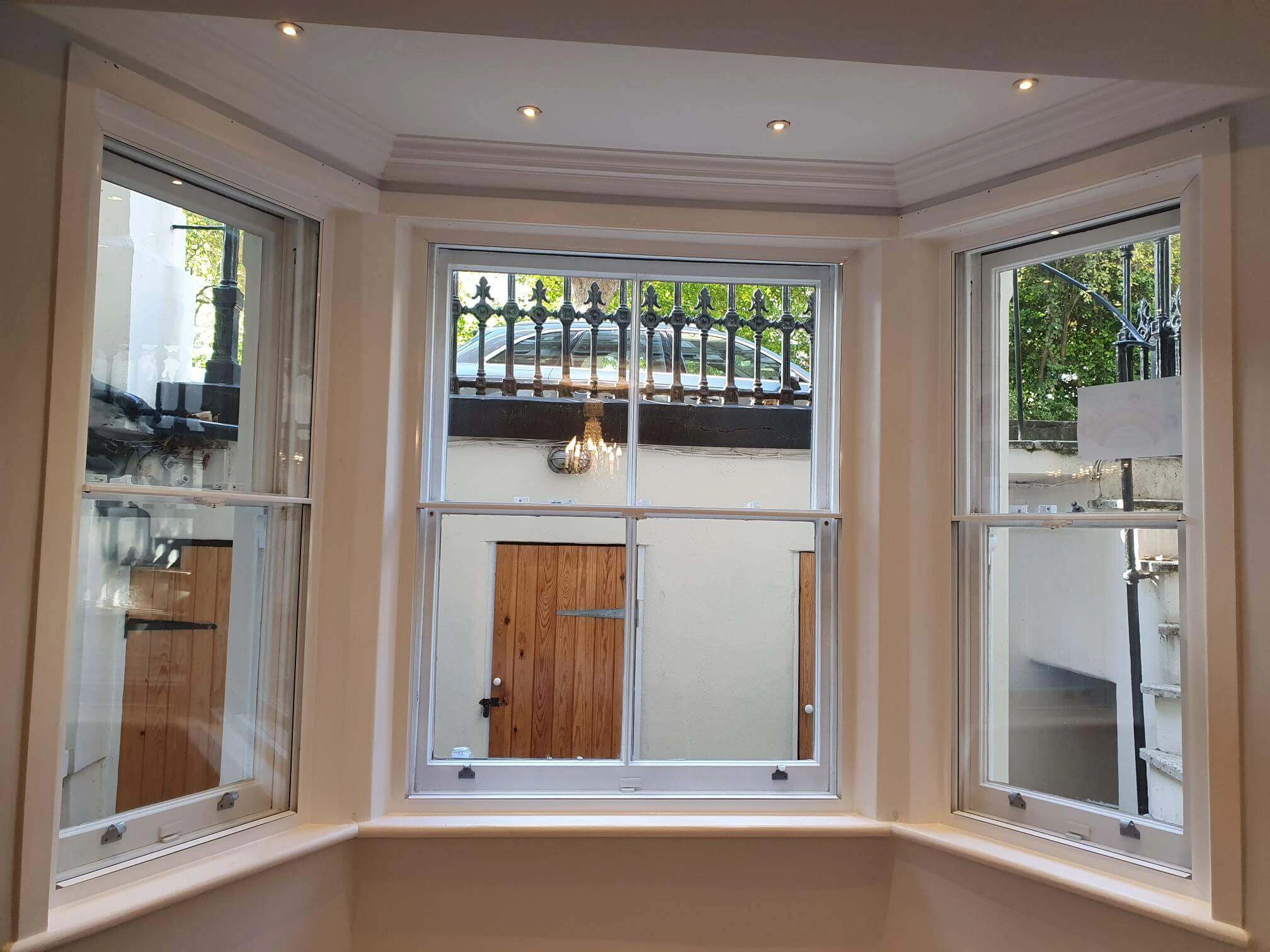
If you're a London homeowner staring at those beautiful, but drafty and noisy, Victorian or Georgian sash windows, you've probably wondered: "How much is this actually going to cost me?"
Let's cut through the vague "£200–£800" ranges you see online and give you the real numbers for secondary glazing sash windows cost in 2026, broken down by window type, glass specs, and even which London borough you're in.
What You'll Actually Pay: The Honest Breakdown (m²-Based Pricing)
To make this page (and our calculator) genuinely accurate, the pricing logic here is strictly based on square metres (m²) of glazing area — not a vague "per window" guess. Two Victorian sashes can look similar but have very different sizes, and size is the biggest driver of cost.
Here's the baseline for secondary glazing London projects in 2026, expressed in £/m² (supply + manufacture + installation, using typical London access assumptions):
Typical installed price ranges (per m²):
- Lift-out panel with 4mm glass: £340–£420 per m²
- Horizontal/vertical slider with 6.4mm laminated glass: £460–£580 per m²
- Horizontal/vertical slider with 6.8mm acoustic laminate glass (mid-tier): £500–£640 per m²
- Vertical slider with 10.8mm acoustic laminate glass: £540–£720 per m²
Large Georgian bay windows (why m² matters even more): bays vary massively by pane sizes and height, so pricing is best understood as total bay m² x chosen spec (then adjusted for access/finish). In practice, most London bays land within the ranges above once you calculate the actual area.
Why the range? It comes down to three main factors: glass specification, frame finish, and, surprisingly, your postcode.
Here's the baseline for secondary glazing London projects in 2026:
Standard Victorian Sash Window (single unit):
- Lift-out panel with 4mm glass: £367–£454
- Horizontal slider with 6.4mm laminate: £497–£626
- Vertical slider with 10.8mm acoustic laminate glass: £583–£778
Large Georgian Bay Window (three sash units):
- Standard configuration: £1,242–£1,836
- With 10.8mm acoustic upgrade: £1,728–£2,430
Why the range? It comes down to three main factors: glass specification, frame finish, and, surprisingly, your postcode.
The Glass Game: 4mm vs. 10.8mm Acoustic Laminate (and the sweet-spot 6.8mm)
Not all secondary glazing is created equal. If you're on a main road or under a Heathrow flight path, this section is worth your attention.
Standard 4mm Glass:
- Costs around £100–£120 per square metre (glass cost)
- Reduces noise by about 15–20 dB
- Good for thermal insulation, average for sound
6.4mm Laminated Glass:
- Costs around £140–£170 per square metre (glass cost)
- Adds a layer of impact resistance (useful for ground-floor windows)
- Moderate noise reduction (25–30 dB)
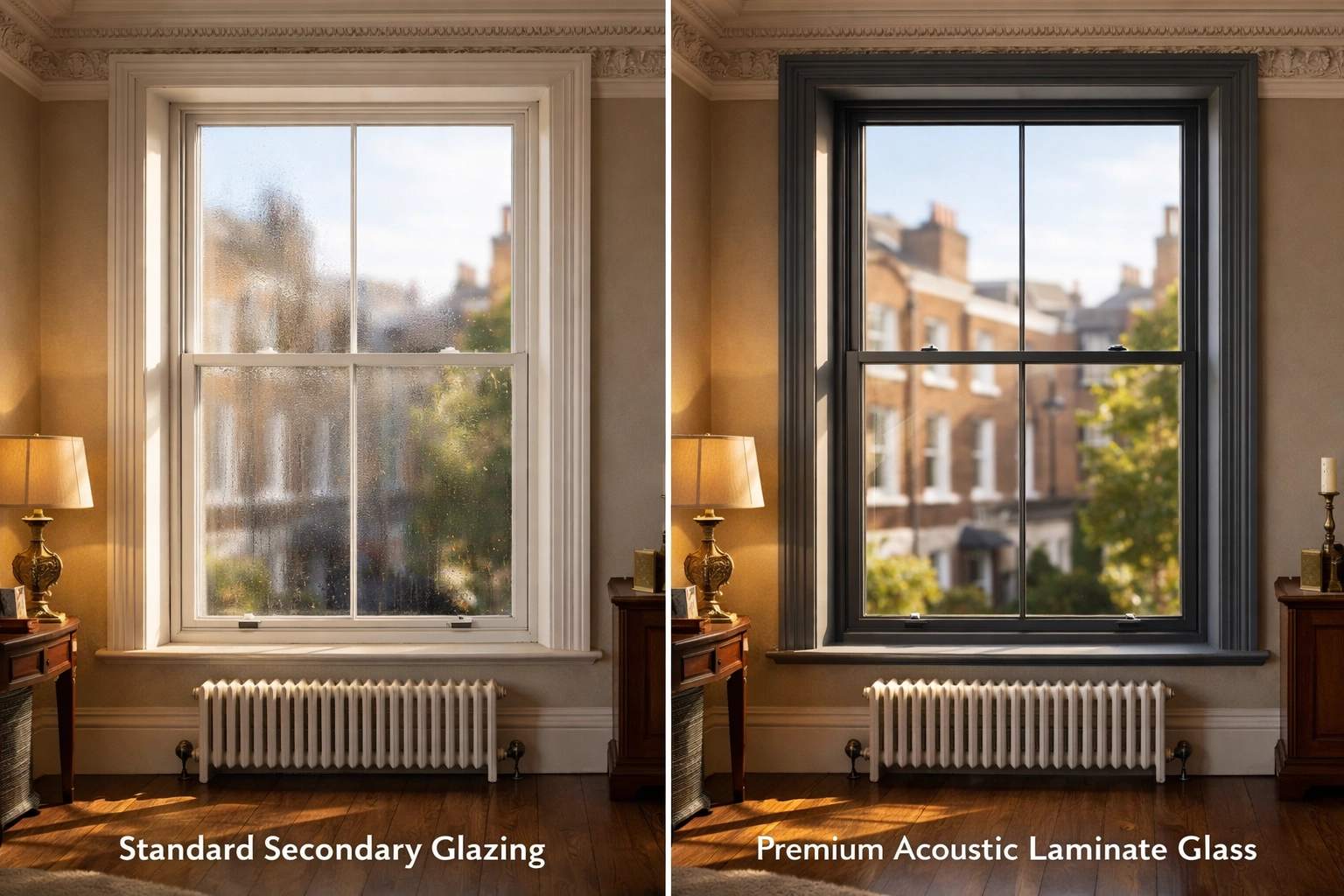
6.8mm Acoustic Laminate Glass (mid-tier, best value for many London period homes):
- Costs around £160–£190 per square metre (glass cost)
- Noticeably better sound damping than standard laminate (thanks to an acoustic interlayer)
- A great "middle step" when 10.8mm feels like overkill, but 6.4mm isn't quite enough
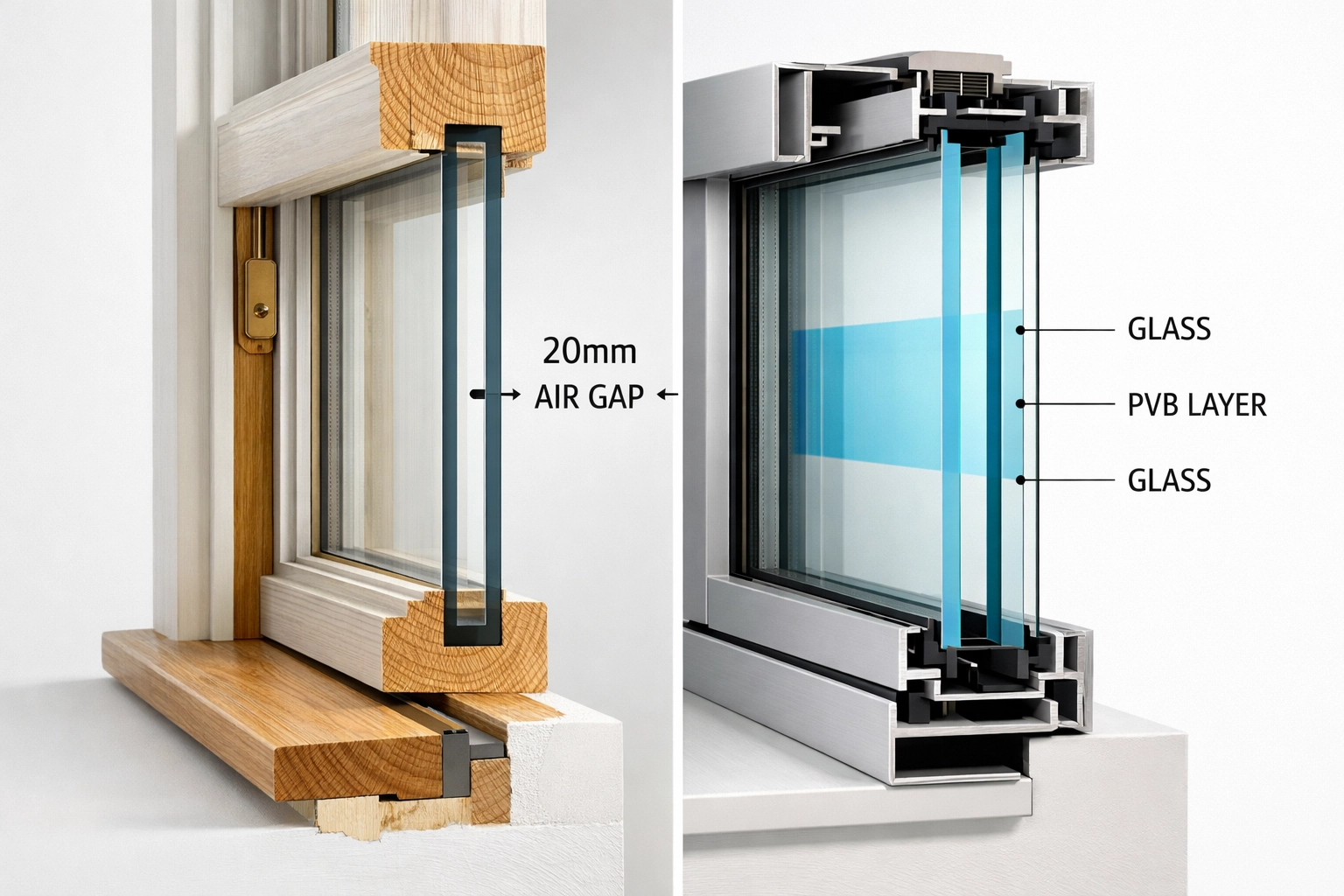
10.8mm Acoustic Laminate Glass (the gold standard):
- Costs around £200–£240 per square metre (glass cost)
- Reduces noise by up to 45 dB (that's dramatic)
- Uses a specialist PVB interlayer designed to disrupt sound frequencies
- Adds serious thermal performance
A transparency note: online articles often talk "per window upgrades", but sizes vary wildly in London (especially tall Georgian sashes). That's why our calculator works in m² — the fairest way to price it. Once you enter rough dimensions, you'll see exactly how changing from 6.4mm → 6.8mm acoustic laminate → 10.8mm affects your estimate.
Frame Finishes: When White Isn't Enough
Most quotes assume white powder-coated aluminium frames. But if you're in a conservation area, or you just have taste, you might want something that blends with your original joinery.
Standard white frames: Included in base price
Custom RAL colour match: Add £50–£80 per window
Satin anodised (for that heritage look): Add £80–£100 per window
Slimline profiles (minimalist aesthetic): Add £60–£90 per window
In boroughs like Kensington & Chelsea or Westminster, where conservation officers have opinions, a colour-matched slimline frame isn't a luxury, it's a survival tactic.
The London Postcode Premium (Yes, It's Real)
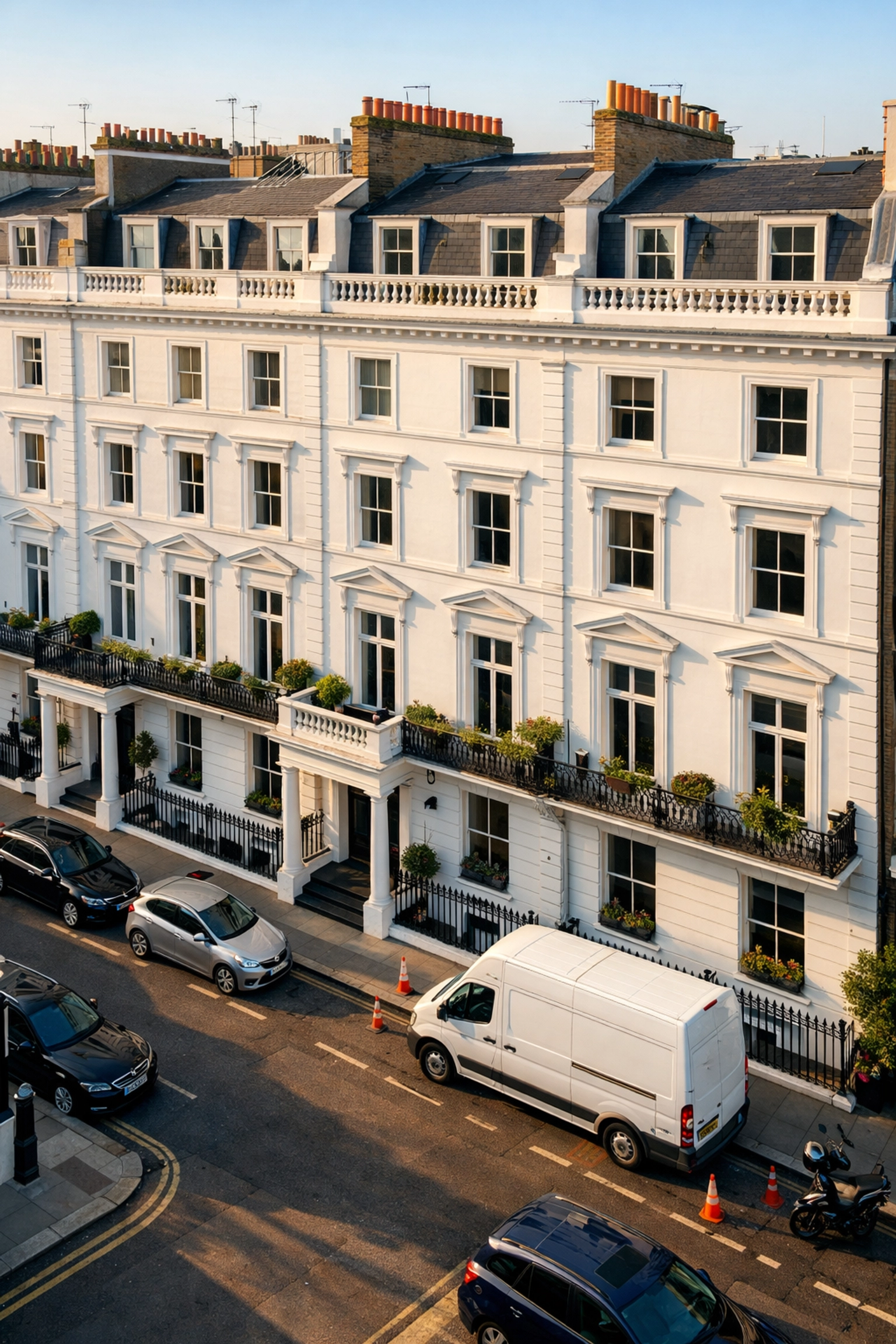
Let's talk about the elephant in the room: secondary glazing sash windows cost more in prime Central London postcodes. Here's why:
Access & Logistics:
- Street parking in Mayfair or Chelsea? Good luck. Expect a £60–£120 "access surcharge" for permits and loading zones.
- Upper-floor installations in a five-storey Belgravia townhouse? Add £120–£180 for scaffolding or specialist access.
Estate-Specific Requirements:
- The Grosvenor Estate (Mayfair & Belgravia) has strict specifications for secondary glazing. Frames must be invisible from the street, which usually means slimline profiles and custom colours. Budget an extra £180–£300 per window for compliance.
- Cadogan Estate (Chelsea & Knightsbridge) requires pre-approval for any visible changes. The paperwork alone can add 2–3 weeks to the project timeline.
Labour Rates:
- Inner London installers charge £180–£240 per day (per person)
- Outer London and Home Counties: £150–£180 per day
For a typical 8-window terraced house in Chelsea, expect the total project cost to be 10–15% higher than the same house in Clapham or Dulwich.
Real Project Examples (2026 Pricing)
Let's get practical. Here's what actual London homeowners are paying:
Scenario 1: Four-Bedroom Victorian Terrace in Balham
- 10 sash windows (mix of single and double units)
- Horizontal sliders with 6.4mm laminate glass
- White frames, standard access
- Total: £5,100–£6,500 (£510–£650 per window average)
Scenario 2: Georgian Townhouse in Kensington
- 8 tall sash windows (2.2m height)
- Vertical sliders with 10.8mm acoustic laminate glass
- Custom RAL 7016 (anthracite grey) slimline frames
- Conservation area paperwork included
- Total: £7,700–£9,400 (£970–£1,180 per window average)
Scenario 3: Ground-Floor Flat in Shoreditch
- 4 sash windows facing Kingsland Road
- Lift-out panels with 10.8mm acoustic laminate glass
- Standard white frames
- Total: £2,200–£2,700 (£550–£675 per window average)
Hidden Costs (And How to Avoid Them)
Most quotes should include professional survey, fitting, and waste removal. But always confirm these are bundled:
What Should Be Included:
- Site survey and measurements
- Manufacturing of custom frames
- Professional installation (2-person team)
- Waste removal and site cleanup
- 5–10 year guarantee
What Might Cost Extra:
- Remedial work on damaged sills or frames (£100–£180 per window)
- Planning or conservation area applications (£240–£480 flat fee)
- Scaffold hire for upper floors (£480–£960 per week)
- Custom glass (e.g., frosted, tinted, or patterned): Add 20–35%
DIY Kits: Why They're Cheaper (And Why That Matters)
You'll see "secondary glazing kits" online for £80–£150 per window. Here's what you're actually getting:
- Thin acrylic sheets (2–3mm)
- Magnetic or adhesive tape fixings
- No acoustic performance (maybe 5–10 dB reduction)
- 1–2 year lifespan before yellowing or warping
If you're in a rental or need a temporary solution, fine. But for a permanent fix in a £1.5 million London terrace? It's like putting bicycle tyres on a Bentley.
Professional 10.8mm acoustic laminate glass in engineered aluminium frames will outlast your mortgage. See our full DIY vs Professional comparison.
When Secondary Glazing Makes More Sense Than Replacement
Full sash window replacement in London starts at around £1,500 per window and can hit £3,000+ for complete box sash units with acoustic glass. So when does secondary glazing win?
Choose secondary glazing if:
- Your property is listed or in a conservation area (planning officers love secondary glazing because it's reversible)
- Your original sashes are in good condition but just inefficient
- You want 80% of the thermal and acoustic performance at 40% of the cost
- You need it done fast (typical install: 1–2 days vs. 2–3 weeks for replacement)
Choose full replacement if:
- The original frames are rotten beyond repair
- You want maximum energy efficiency (triple glazing)
- You're doing a full facade restoration anyway
The 2026 Cost Outlook
Material costs for secondary glazing London have stabilised after the post-pandemic chaos, but labour rates are still climbing (about 5–7% year-on-year in London).
The sweet spot? Book now for spring installations. Most installers offer winter discounts (November–February) because demand drops, but the work is identical.
What You Should Actually Pay in 2026
Here's the final cheat sheet:
Budget Option:
- £340–£480 per window (lift-out panels, 4mm glass, standard frames)
- Best for: Spare rooms, low-traffic areas, tight budgets
Mid-Range (Recommended):
- £480–£660 per window (horizontal/vertical sliders, 6.4mm laminate, quality frames)
- Best for: Living areas, bedrooms, most London homes
Premium Acoustic:
- £660–£900+ per window (10.8mm acoustic laminate glass, slimline custom frames)
- Best for: Main roads, flight paths, Mayfair mansions
Get Your Exact Cost in 60 Seconds
Every sash window is different. That bay in your front room? The wonky Victorian frame upstairs? They all need custom measurements.
Instead of guessing, use the Cost Calculator to get an instant, personalised estimate based on your window area in square metres (m²), glass spec, and London postcode.
It takes less time than reading this article — and you'll know exactly what you're working with.
Secondary Glazing Specialist Price Promise
We don't like bait-and-switch pricing. So here's our promise, in plain English:
- The estimate you get from our calculator is the price we will honour for your chosen spec…
- …subject to an on-site technical survey confirming the dimensions and installation requirements (we check access, reveal depth, handle positions, and any quirks common in period homes).
- If the survey confirms the measurements match what you entered (roughly), your price stays the same.
- If the survey finds the dimensions are materially different (easy to do with old, out-of-square sashes), we'll explain what changed and why before anything is ordered.
That's the whole point of an m²-based calculator: fair, consistent pricing that doesn't rely on guesswork.
Measuring for Success (rough dimensions for the calculator)
You don't need pro tools — just a tape measure (or laser measure) and 2 minutes per window.
What to measure (per window opening):
- Width (mm): measure the visible opening left-to-right.
- Height (mm): measure the visible opening top-to-bottom.
Quick tips so your estimate stays accurate:
- Measure in millimetres (mm) if you can (it reduces rounding errors).
- Old frames are rarely perfectly square. If you're unsure, take two widths (top and bottom) and two heights (left and right) and use the largest numbers for the calculator (it's safer for estimating).
- If it's a bay, measure each sash/opening separately — bays can mix widths even when they look symmetrical.
Bottom line (transparent version): your calculator price is based on m², so it reflects real size, not "average window" assumptions. Anything significantly cheaper? Check what you're actually getting. Anything significantly more? Make sure it's justified (access, finishes, or truly higher-spec glass).
Transparency matters. Now go get that quote.
Written by
James Wilson
Senior Glazing Consultant
With over 20 years of experience in the secondary glazing industry,James is a leading expert in acoustic and thermal window solutions.