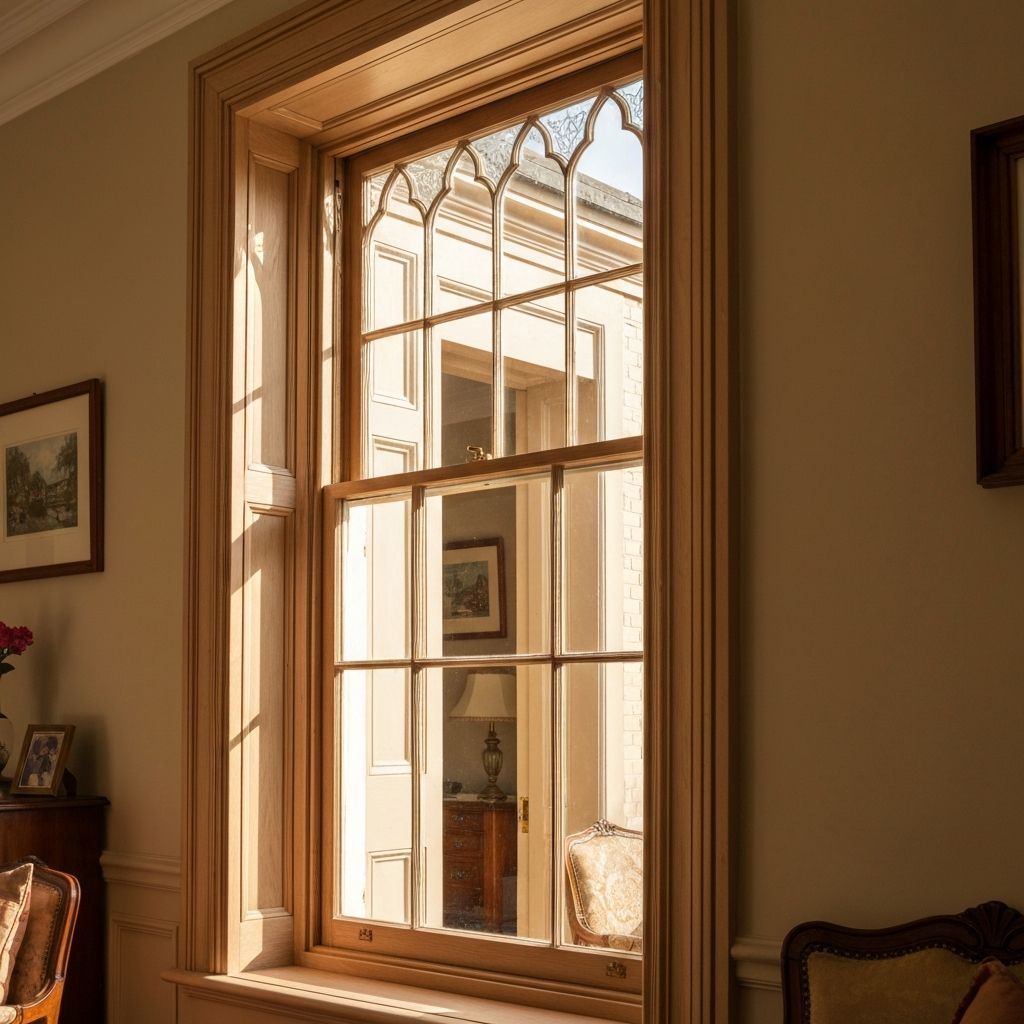
If you own a period property in London, the choice is rarely as simple as old windows versus new windows. Refurbishment can keep original sash windows working, while secondary glazing adds the acoustic and thermal layer a replacement is often expected to provide. This guide compares the three realistic routes.
The short answer for period and listed homes
For many period and listed properties, refurbishing the original sash and adding secondary glazing is the most balanced route. The original window stays in place and operational, the intervention is internal and reversible, and the new layer can address both outside noise and heat loss. Read our guide to soundproofing Victorian sash windows and our listed-building comparison for more detail.
Option 1: Full replacement with new double-glazed sash windows
Replacement can be a sensible route for an unlisted home undergoing a full renovation, especially where the owner has a large budget and wants a new window specification throughout. It is not automatically the best answer for a period property.
In a listed building, replacement will usually require Listed Building Consent. It is also frequently refused in conservation areas because it removes or changes original fabric and alters the character of the elevation. A sash profile cannot usually accommodate the same wide cavity as a separate internal secondary-glazing system, so acoustic and thermal gains may be more limited than the headline description of double glazing suggests. Always compare the complete specification, not just the number of panes.
Option 2: Refurbishment alone
Refurbishment can include draught-proofing, repairs, re-cording and re-puttying. It preserves the original window and can remove rattles, improve operation and reduce draught paths. That work is often a sensible first step when the sash is damaged or difficult to operate.
The honest limitation is that the single glazing remains. Refurbishment alone therefore does not provide the same acoustic or thermal change as adding an independent glazed layer. If the main problem is traffic noise or a cold room, the repaired sash may still need a second stage.
Option 3: Refurbish plus secondary glazing
This is our recommendation for many period homes. The sash is repaired, re-corded or re-puttied where needed and remains fully operational. A secondary unit is then fitted inside the reveal using slimline aluminium frames and 10.8mm acoustic laminated glass where the specification calls for it.
Suitable installations can achieve up to 54dB noise reduction, described as up to 80% quieter. Thermally, a window U-value can improve from 5.0 to 1.8 W/m²K, representing a 64% reduction in heat loss through the window area. Condensation on the original windows can be eliminated with the right specification and building-physics approach. The system is fully reversible, internal and typically does not require planning permission, although listed building consent and conservation guidance should always be confirmed for the property.
Where the reveal allows, the air cavity can be up to 100–150mm, compared with the 12–16mm cavity normally found in a double-glazed unit. That separation is one reason an independently sealed secondary pane can be effective for period windows. Explore our listed building secondary glazing service before you decide.
Comparison at a glance
| Measure | Replacement | Refurbishment alone | Refurbishment + secondary glazing |
|---|---|---|---|
| Noise reduction | Depends on the replacement specification; the sash profile limits cavity width. | Helps with rattles and draught paths, but the single glazing remains. | Up to 54dB noise reduction, or up to 80% quieter, on suitable installations. |
| Thermal performance (U-values) | Depends on the complete replacement window and installation. | Single glazing remains; thermal improvement is limited. | 5.0 to 1.8 W/m²K, with up to 64% less heat loss through the window area. |
| Listed building consent | Usually required in listed buildings and replacement is frequently refused in conservation areas. | Depends on the building and work proposed. | Typically not required for reversible internal secondary glazing, but confirm with the local authority. |
| Cost | Varies by joinery, glazing, making good and consent requirements. | Request a survey for an honest refurbishment-only assessment; we do not publish an invented guide price. | From £675 for a small casement, £1,220 for a Victorian sash and £2,565 for a large Georgian bay, installed including VAT. |
| Reversibility and character | Original fabric is removed or altered. | Original fabric is retained. | Original sash is retained and the internal layer is fully reversible. |
London properties and the consent question
Across period housing in Kensington, Chelsea, Westminster, Hampstead and Richmond, the window is often part of the building's identity. Conservation-area controls and listed-building significance make an internal, reversible specification worth considering before any replacement quotation is accepted. Read the planning and consent guide and ask the relevant local authority what applies to your property.
The London landlord EPC angle
The confirmed policy direction is Band C for privately rented homes in England by 1 October 2030. It is not yet in force: the current minimum remains Band E. The framework includes a £10,000 per-property cap, qualifying expenditure from 1 October 2025 and a 10-year cost-cap exemption route where Band C still cannot be reached after the full qualifying spend.
Secondary glazing can improve an EPC rating by 1–2 bands, depending on the whole property and the assessment. It should be considered alongside the current EPC recommendations, the rest of the building fabric and any heritage constraints. It is not a guarantee that a particular property will reach Band C.
What does it cost?
Verified installed prices including VAT start at £675 for a small casement up to 600 × 900mm, £1,220 for a Victorian sash up to 900 × 1,500mm, and £2,565 for a large Georgian bay up to 2,400 × 1,800mm. We do not invent a refurbishment-only figure because sash condition, access and the work required vary. Use the 2026 cost guide and request a free survey for a project-specific answer.
Our honest recommendation
If your home is unlisted and you are already planning a full renovation, replacement may make sense. That is the honest trade-off. For listed buildings and conservation-area properties, however, refurbishment plus secondary glazing is often the only compliant, sensible route: it keeps the original character, supports a consent conversation and addresses noise and heat loss without irreversible replacement.
We offer a same-day or 24-hour quote, a typical 3–4 week survey-to-fit timeline, single-day installation where suitable, a 10-year guarantee, more than 25 years of heritage experience, 1,000+ installations and £5M insurance. Start with our sash-window soundproofing advice, use the calculator for an initial estimate, or request a free survey and quote.
Written by
James Wilson
Heritage glazing specialist
With over 20 years of experience in the secondary glazing industry,James is a leading expert in acoustic and thermal window solutions.