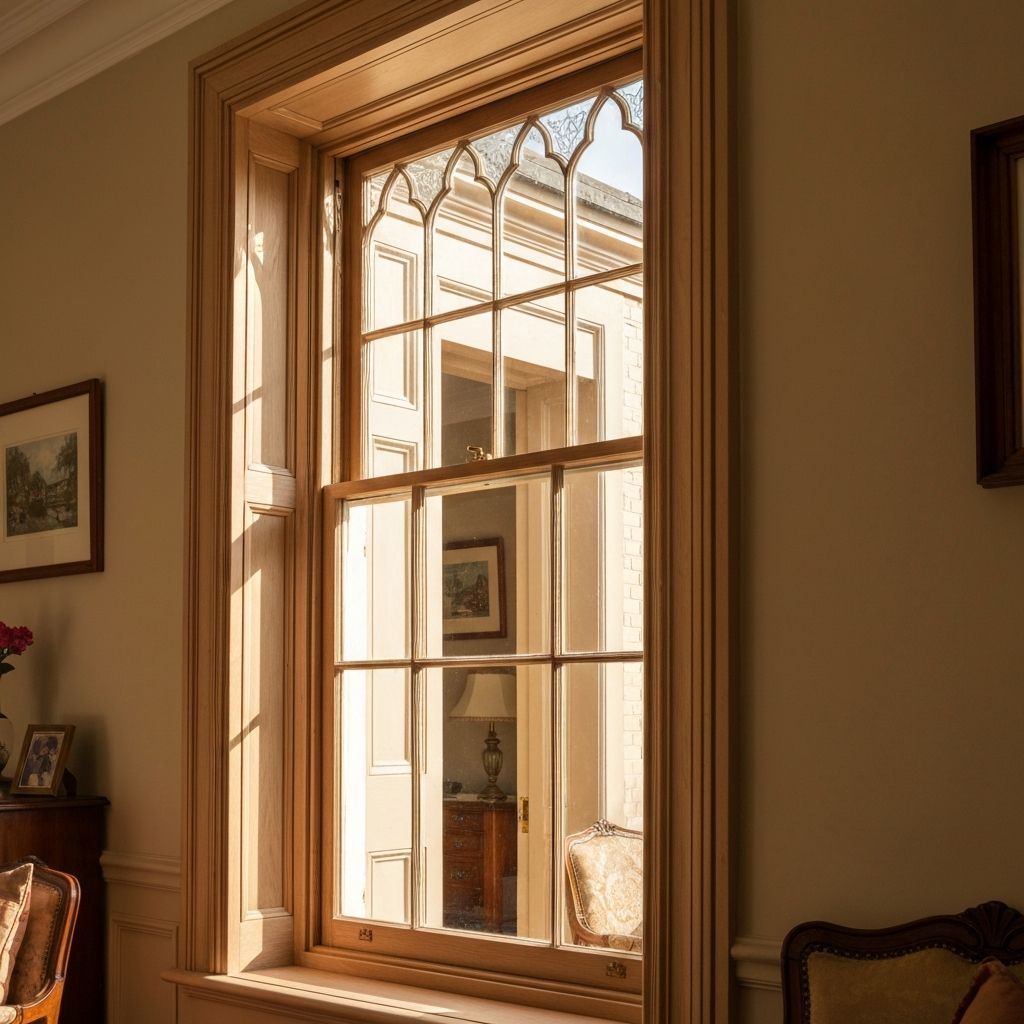
Victorian sash windows are beautiful, but their original construction can let in road, rail and neighbour noise. The good news is that you do not need to remove the window to make a room quieter. This guide explains the solutions ladder, from careful draught-proofing to acoustic secondary glazing.
Why sash windows leak noise
Traditional sashes usually have thin single glazing, often with gaps around the sliding sashes. Over time, parting beads and staff beads can degrade, leaving more air paths around the meeting rails and frame. A sash can still look sound while the perimeter seals have become a direct route for outside noise.
Glass thickness matters too. A single pane offers limited acoustic mass, and a loose or poorly sealed pane can vibrate with traffic. The room may also have other paths through vents, doors, roofs and walls, so the window survey should identify the dominant route before you choose a product.
The soundproofing ladder
1. Repair and draught-proofing
Start with the basics: repair damaged beads, check the sash cords and meeting rails, and improve the perimeter seals without preventing normal operation. Draught-proofing can make a room feel calmer and remove rattles, but it is not the same as acoustic glazing and will not deliver the published secondary-glazing result.
2. Curtains, shutters and room measures
Heavy curtains, lined shutters and sensible room layout can reduce reflections, but they are not a sealed external barrier. They are useful supporting measures when the noise also reaches the room through the rest of the building envelope.
3. Acoustic secondary glazing
For a demanding noise problem, the strongest window-led step is an independent secondary pane fitted inside the reveal. It keeps the original sash in place and gives the room a properly sealed acoustic layer.
How secondary glazing soundproofs a sash window
The air cavity is central to the design. Where the reveal allows, the cavity can be up to 100–150mm wide. That is substantially wider than the 12–16mm cavity in typical double glazing, giving the two panes more separation. We specify 10.8mm acoustic laminated glass where it suits the room and use acoustic sealing around the frame.
For suitable installations, the verified performance is up to 54dB noise reduction, described as up to 80% quieter. This is a maximum result, not a guarantee for every home. The final outcome depends on the original sash, the reveal, the sealing at the perimeter and other sound paths in the room.
For a closer look at the service, read our sash window soundproofing landing page and our acoustic secondary glazing guide.
Heritage mechanics
Slimline aluminium frames are designed to follow the sightlines of a sash. The new unit sits inside the reveal behind the original window, so the external elevation and the historic sash remain unchanged. The original window stays fully operational for opening, sliding and cleaning, while the separate inner pane can be accessed and cleaned as its own layer.
The system is fully reversible. Planning permission is typically not required for internal secondary glazing, and the approach is suitable for many listed buildings and conservation areas. Listed building consent and local conservation guidance still need to be checked for the particular property. Our planning guide and listed building guide explain what to document.
Honest trade-offs
You lose a small amount of reveal depth because the second pane occupies space behind the sash. The secondary unit is also a separate pane to clean. Those are genuine design facts, so we discuss them during the survey rather than hide them. The benefit is that the original window, its external appearance and its operation remain intact.
Thermal and condensation benefits
The same sealed layer can improve thermal performance. A suitable specification can improve the window U-value from 5.0 to 1.8 W/m²K, a 64% heat-loss reduction through the window. Condensation on the original sash is eliminated on the original windows when the system and room conditions are suitable; ventilation and building defects still need to be considered.
Cost and installation
A standard Victorian sash up to 900 × 1,500mm starts at £1,220 installed including VAT. Small casements up to 600 × 900mm start at £675, while large Georgian bays up to 2,400 × 1,800mm start at £2,565. See the full cost breakdown or use the calculator for a starting estimate.
A survey-to-fit timeline is typically 3–4 weeks, with a same-day or within-24-hour quote, single-day installation and a 10-year guarantee. The team brings 25+ years of heritage experience, 1,000+ installs and £5M insurance. Request a free survey for the exact specification.
Frequently asked questions
Does secondary glazing work with sash windows?
Yes. The independent inner pane is measured to the reveal behind the original sash, so the existing window can remain in place.
Can you still open the sash afterwards?
Yes. The original sash stays operational for opening, sliding and cleaning, with access to the separate secondary pane planned during the survey.
How much noise does it actually remove?
Suitable installations can reduce noise by up to 54dB, or up to 80% quieter. The actual result depends on the room and the sound paths.
Does it need planning permission?
Internal secondary glazing typically does not require planning permission, but listed building consent and local guidance should be checked for the property.
Written by
Sarah Mitchell
Heritage glazing specialist
With over 20 years of experience in the secondary glazing industry,Sarah is a leading expert in acoustic and thermal window solutions.