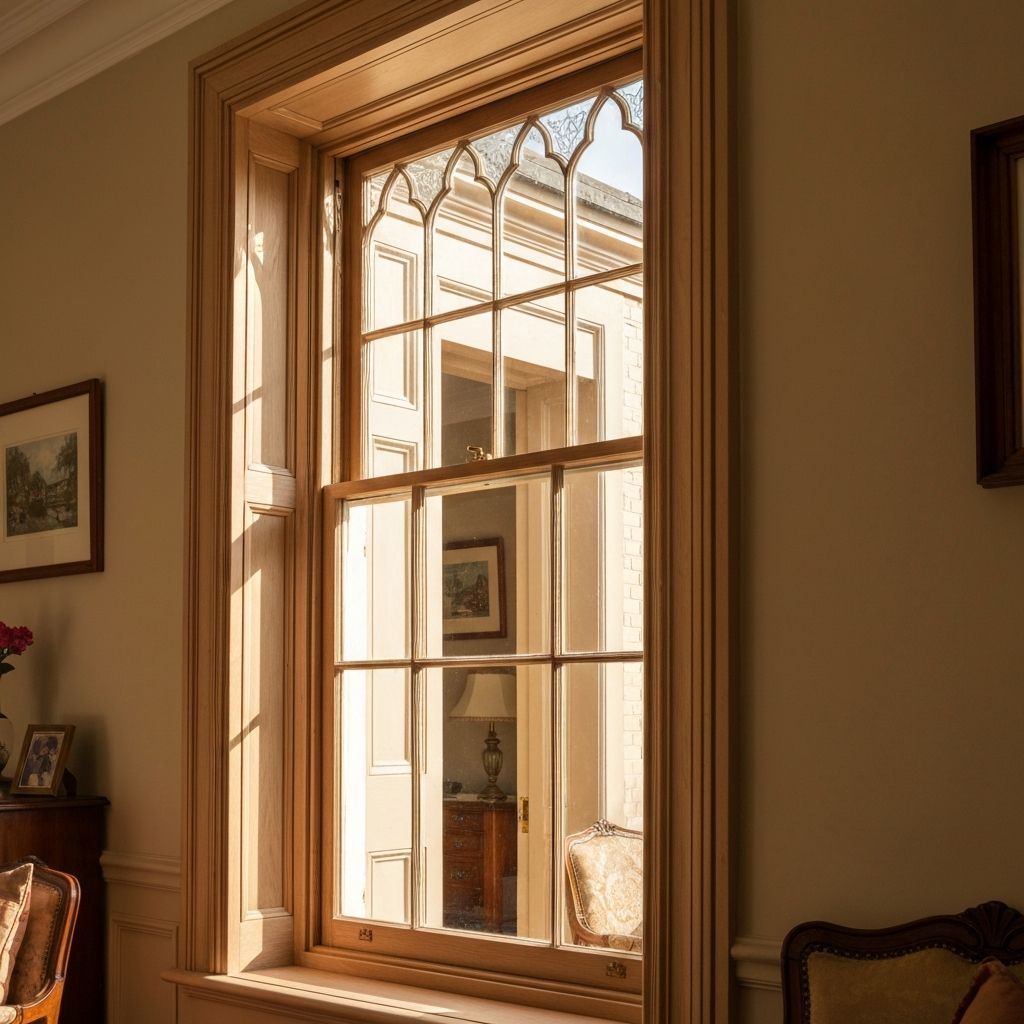
Owners of listed homes in Kensington often assume that every window change means a separate listed building consent application. As of 2026, that is often no longer true in the Royal Borough of Kensington and Chelsea. The council has made Local Listed Building Consent Orders, or LLBCOs, that pre-approve specific window works when a building and project meet the order's conditions.
This guide explains the two relevant window orders for Grade II listed buildings, including the 2026 order covering Queen's Gate, Pembridge and Holland Park. It is practical guidance, not a substitute for checking the order against your specific property.
What is an LLBCO?
A Local Listed Building Consent Order is blanket, pre-granted listed building consent for defined works. If your building and the proposed works fall within the order and all conditions are met, you do not need to make an individual listed building consent application for those works.
That does not mean conditions can be skipped. Materials, finishes, fixing methods, evidence and the precise scope of work still matter. If you are unsure whether your property or proposal is covered, use RBKC's official LLBCO page, request pre-application advice or apply for a Certificate of Lawfulness of Works.
The 18 May 2023 borough-wide window order
RBKC made a borough-wide LLBCO for window works on 18 May 2023. It covers Grade II listed buildings only. Under this order, installing secondary glazing to any window is allowed without an individual listed building consent application and without an application for approval of details, subject to the order's conditions.
The same order allows double-glazed sealed units within existing frames only in limited circumstances: the window to be altered must itself be a replacement or new window in an extension, or it must have been installed after the date of listing with consent. This is not blanket approval to replace original listed sash windows with double glazing.
The 20 March 2026 Queen's Gate, Pembridge and Holland Park order
RBKC made a further LLBCO for window works on 20 March 2026. It covers Grade II listed buildings in the Queen's Gate, Pembridge and Holland Park Conservation Areas.
This order includes replacing existing machine-manufactured float glass in sash windows, in one-over-one or two-over-two configurations, with slimline double glazing. The work is subject to conditions and type evidence being submitted to the council beforehand. Check the order and the evidence requirements before instructing work; the conservation-area location alone does not answer whether a particular window is covered.
RBKC also holds LLBCOs for solar panels, made 18 May 2022 for Grade II and most Grade II* buildings. That is useful context: the council uses LLBCOs to pre-approve defined retrofit work, but each order has its own building types, scope and conditions.
Why this matters for secondary glazing
For a Grade II listed RBKC building, the 18 May 2023 order removes the biggest objection many owners raise about secondary glazing: the fear that an individual listed building consent application is automatically required for an internal secondary layer. Secondary glazing is installed inside the existing reveal, is fully reversible and can preserve original sash windows while improving comfort.
On suitable installations, the verified published performance is up to 54dB noise reduction, described as up to 80% quieter. A window U-value can improve from 5.0 to 1.8 W/m²K, representing a 64% reduction in heat loss through the window area. These are window-level results, not a guarantee for the whole building, and the final specification depends on the existing window, reveal, glass and installation.
Read our listed building secondary glazing service, our Victorian sash soundproofing guide and our 2026 cost guide for the wider design and pricing context.
Owner checklist before work starts
- Confirm that the building is Grade II listed and within RBKC.
- Check whether the 18 May 2023 borough-wide order or the 20 March 2026 Queen's Gate, Pembridge and Holland Park order covers the proposed work.
- Read the relevant order's conditions, including requirements for frame materials, finishes, fixing methods and evidence.
- Keep photographs, window schedules, product information and evidence that the installed work matches the conditions.
- If anything is uncertain, use RBKC's pre-application advice service or apply for a Certificate of Lawfulness of Works before starting.
Scope limits: Kensington orders are not London-wide
These LLBCOs are RBKC-only and Grade II-only. Grade I and II* buildings, and properties in other boroughs such as Westminster or Hammersmith & Fulham, follow the standard rules for their own authority. Internal reversible secondary glazing is still typically acceptable as a conservation approach, but check with the relevant conservation officer and do not assume an RBKC order applies.
Our planning and consent guide covers the general rules. You can also use the secondary glazing calculator for an initial estimate, then request a free survey and same-day quote. We handle heritage paperwork routinely, with 25+ years of heritage experience, 1,000+ installations, a 10-year guarantee and single-day installation where suitable.
Written by
James Wilson
Heritage glazing specialist
With over 20 years of experience in the secondary glazing industry,James is a leading expert in acoustic and thermal window solutions.